Literary Studies, Digital Humanities, and Artificial Intelligence
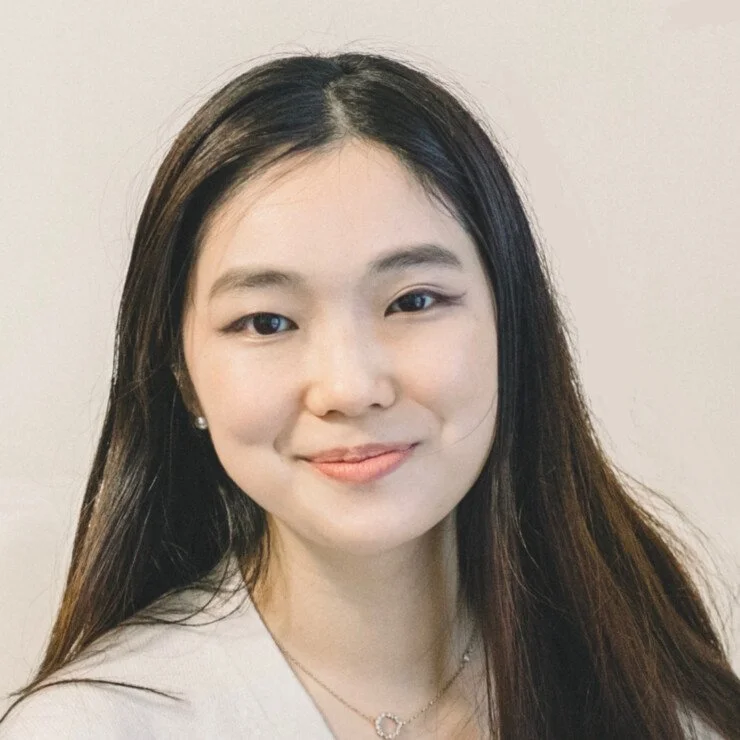
Jenny C. Y. Kwok is a tenure-track Assistant Professor at Hong Kong Baptist University working on how artificial intelligence reshapes reading and interpretation in the humanities, and how humanistic inquiry can in turn inform the development and use of AI.
Her research spans literary interpretation, Irish literature, AI-assisted reading, creativity, and the history of disciplinary change in the humanities.
Research
Her research explores how the humanities respond to moments of technological and methodological change, with particular attention to reading, interpretation, creativity, and disciplinary self-understanding. Across literary studies, digital humanities, and AI research, she is interested in how new tools alter the conditions of interpretation, and how humanistic traditions can help clarify what is at stake in these transformations.
Research Areas
AI, Reading, and Interpretation
Jenny’s central research area examines how artificial intelligence reshapes reading and interpretation in literary and humanistic inquiry. Her work on retrieval-augmented generation (RAG), large language models (LLMs), and literary analysis asks whether these tools can support forms of close reading at scale, reveal patterns or undertones that dominant interpretations have overlooked, and prompt new reflection on what interpretation itself means in the age of AI.
She is currently developing this work into a broader framework for AI hermeneutics.
Historical and Conceptual Foundations of Reading
A second strand of her research revisits earlier moments in literary studies where close reading, pattern recognition, institutional pressure, and disciplinary self-definition came into tension. This includes work on Josephine Miles, arguing that Miles’s project can be understood not simply as distant reading, but as a form of close reading informed by large-scale pattern awareness.
It also includes her Oxford project on the interwar Oxford English School, which examines how the humanities negotiated policy demands, utilitarian pressures, and institutional reform while attempting to preserve their intellectual core.
AI, Creativity, and Pedagogy
A third strand of her work explores human–AI collaboration in creative writing and literary pedagogy. Through teaching experiments, classroom observation, and writing-based inquiry, she studies how students use AI as collaborator, co-author, or foil.
This work examines what these interactions reveal about authorship, creativity, language, and literary judgment, particularly in multilingual and ESL contexts.
Current Projects
AI, Archives, and Ambiguity: Troubles Poetry and Retrieval-Augmented Reading
This project examines whether retrieval-based AI methods can support richer literary-historical interpretation of Northern Irish Troubles poetry by surfacing contextual resonances, ambiguities, and undertones that are often flattened by dominant critical readings.
Josephine Miles and the Question of Reading Across Scale
This project reinterprets Josephine Miles’s work as a historically important attempt to bridge close reading and large-scale textual patterning, arguing that her method offers a conceptual precedent for contemporary debates on AI, distant reading, and literary interpretation.
The Oxford English School in Interwar Britain
This project investigates how the Oxford English School responded to policy pressure, efficiency discourse, and changing educational expectations in interwar Britain, while attempting to preserve a distinct humanities core.
It explores how institutional and political pressures reshape disciplinary self-understanding, with implications for current debates about AI and the future of the humanities.
AI, Creativity, and Human Collaboration in Writing Classrooms
This work examines how students collaborate with AI in creative and academic writing, and what these interactions reveal about authorship, style, and the boundaries between human and machine expression.
Selected Publications
Selected publications and works in progress are listed below.
Forthcoming
“Literary Pilgrimage: Reimagining Seamus Heaney’s Station Island as a Journey of Identity and Transformation.”
The Routledge Companion to Seamus Heaney. Routledge. Forthcoming 2026.
Under Review
“AI, Archives, and Ambiguity: Contextualizing Troubles Poetry with Retrieval-Augmented Generation.”
Journal of the Japanese Association for Digital Humanities (JJADH). Under review. 2026.
Revise and Resubmit
“Seamus Heaney’s Poetics of Displacement in Station Island’s Opening Section.”
Folk, Knowledge, Place. Revise and resubmit. 2026
“Data Colonialism and Indigenous Languages in AI.”
AI & Society. Revise and resubmit. 2026
Earlier Publication (Selected)
“A Literary Pilgrimage to Lough Derg: Seamus Heaney and Station Island.”
Pilgrim Paths: Journeys of Transformation. Brill. 2014.
Fellowships & Awards
Gale Scholar, Asia Pacific, Digital Humanities Oxford Fellowship, University of Oxford. 2026.
Fellow, Jesus College, University of Oxford. 2026.
Visiting Fellow, Cambridge Digital Humanities, University of Cambridge. 2025.
Cambridge Digital Humanities Visiting Fellow Scholarship. University of Cambridge. Awarded 2024.
Selected Grants
Digital Humanities Pilot Grant, Faculty of Arts and Social Sciences. Hong Kong Baptist University. HKD 350,000. Awarded 2026. Principal Investigator.
Start-up Research Fund for New Academic Staff, Faculty of Arts and Social Sciences, Hong Kong Baptist University. HKD 200,000. Awarded 2025. Principal Investigator.
HKU Staff Seed Fund. Faculty of Arts, University of Hong Kong. HKD 150,000. “Sentiment Analysis in Computational Literary Studies”. Awarded 2024. Principal Investigator.
Teaching Development Grant (TPG), Faculty of Arts, The University of Hong Kong. HKD 300,000. “Nabi: An AI chatbot for RAG-enhanced digital humanities teaching and learning.” Awarded 2024. Co-Investigator.
Selected Talks
Keynote
Augmented Reading: AI, Interpretation, and the Future of the Humanities. 2025 International Conference on Digital Humanities and AI Art, National Sun Yat-sen University (NSYSU), Kaohsiung. 2025.
The Intersection of AI and Creativity: Large Language Models in Creative Writing. International Artificial Intelligence and Creativity Conference (IAICC), CUHK-Shenzhen Research Institute and CG Global Entertainment Ltd. 2025.
Invited Talks
AI-Human Synergy: Enhancing Cultural Knowledge Through Ethical and Inclusive Use of Large Language Models. Friday Frontier, Digital Research Infrastructure for the Arts and Humanities (DARIAH-EU). 2025.
AI Workflows for Literary Studies: Bridging Close and Distant Reading through Josephine Miles. Cambridge Digital Humanities, University of Cambridge.
Ambiguity and Archive: Computational Hermeneutics of Conflict Poetry through RAG. Department of Digital Humanities, King’s College London.
Contact
For speaking invitations, collaborations, or research enquiries, please contact: jennykyc [at] hkbu [dot] edu [dot] hk